Corporate Retreats & Offsites
The Evening of an Offsite
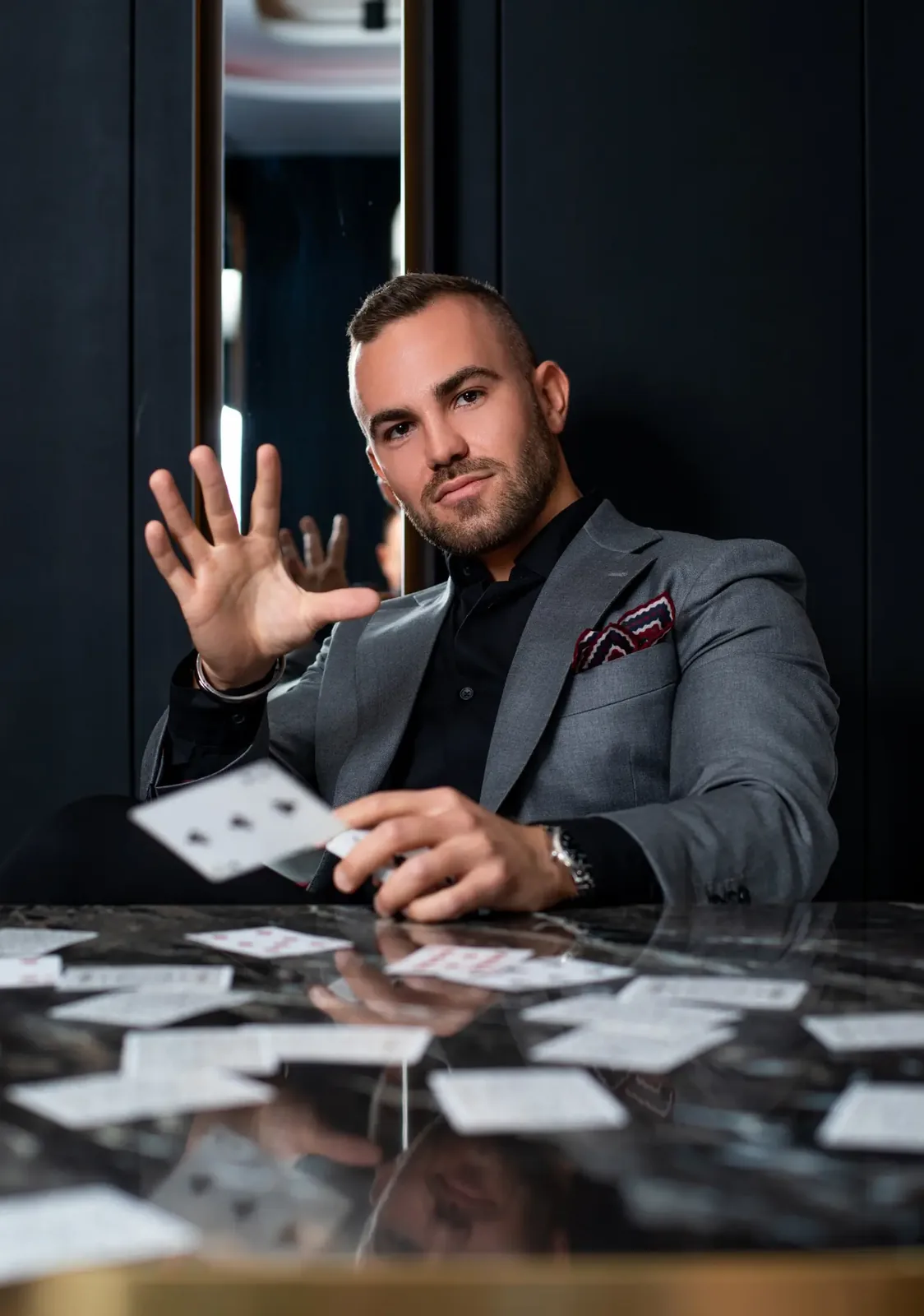
Retreat companies have the daytime solved — the sailing, the scavenger hunt, the vineyard. Then dinner arrives and the evening is left to run itself. It is the only unstructured time in the schedule, and the only point where people who do not normally talk might. Matteo Cammisa is an international magician and mentalist who works that part of the programme.

What actually goes wrong after six o'clock
A company takes forty people out of the office for three days at considerable expense. These are the five ways the evenings waste it.
The day is solved. The evening is not.
Every retreat company sells the daytime brilliantly — kayaking, scavenger hunts, sailing on the bay, an oyster farm in Marin. Then at seven o'clock everyone sits down to dinner, exhausted, and the evening is left to run itself. It is the only unstructured time in a three-day schedule, and it is the only point where people who do not normally speak might.
People sit with the people they already know
Left alone, a team dinner reorganises itself into the org chart. Engineering at one end, sales at the other, the two new hires together because they are the only ones who do not know where else to sit. Whatever the offsite was for, that seating plan quietly undoes it.
Nobody has anything left after a day of sessions
By dinner on day two, people have been in workshops since nine and outdoors since two. Asking them to perform — karaoke, a talent show, an improv game — costs energy they do not have. Something that happens *to* them costs nothing and still lands.
The seniority problem nobody mentions
An offsite puts a VP at the same table as someone six weeks into their first job. Most team-building formats create a moment where somebody looks foolish, and the more senior the person, the worse the room feels about it. This is the quiet reason a lot of entertainment gets vetoed, and it is worth naming out loud when you brief anyone.
It is the one thing that gets phones down
Close-up magic happens in the guest's own hands, so the phone has to go somewhere else. Nothing else on a retreat agenda does that without a rule being announced — and an announced rule about phones sets exactly the wrong tone for an evening.
The mentalism argument
Why this format and not another
It is built from the same faculty the retreat is trying to sharpen
A retreat exists so that people pay closer attention to each other. Mentalism is the craft of attention, observation and suggestion — the same equipment, pointed at entertainment. It is the rare piece of an offsite that is thematically about what the offsite is about, rather than a break from it.
It can be about the group rather than one volunteer
A mentalism piece can be built around a collective decision — something the whole room chooses together — instead of pulling one person to the front. For a company audience that is the difference between a shared moment and a hostage situation.
Nobody is made to look stupid
Done properly, the astonishment lands on the performer's side of the table, not the guest's. This matters more with a mixed-seniority room than with any other audience, and it is the single most common thing organisers are quietly worried about.
It scales down as well as up
The same material works table by table for thirty people at dinner and as a seated set for a hundred and fifty in a room that has stopped. Retreat headcounts move; this format does not need re-scoping when they do.
Where it fits in a multi-day agenda
Welcome evening, day one
The arrival dinner, when people are still sorting out who they know. This is the highest-leverage slot of the whole retreat and almost nobody programs it — get the mixing done on the first night and the next two days run differently.
Table to table at the team dinner
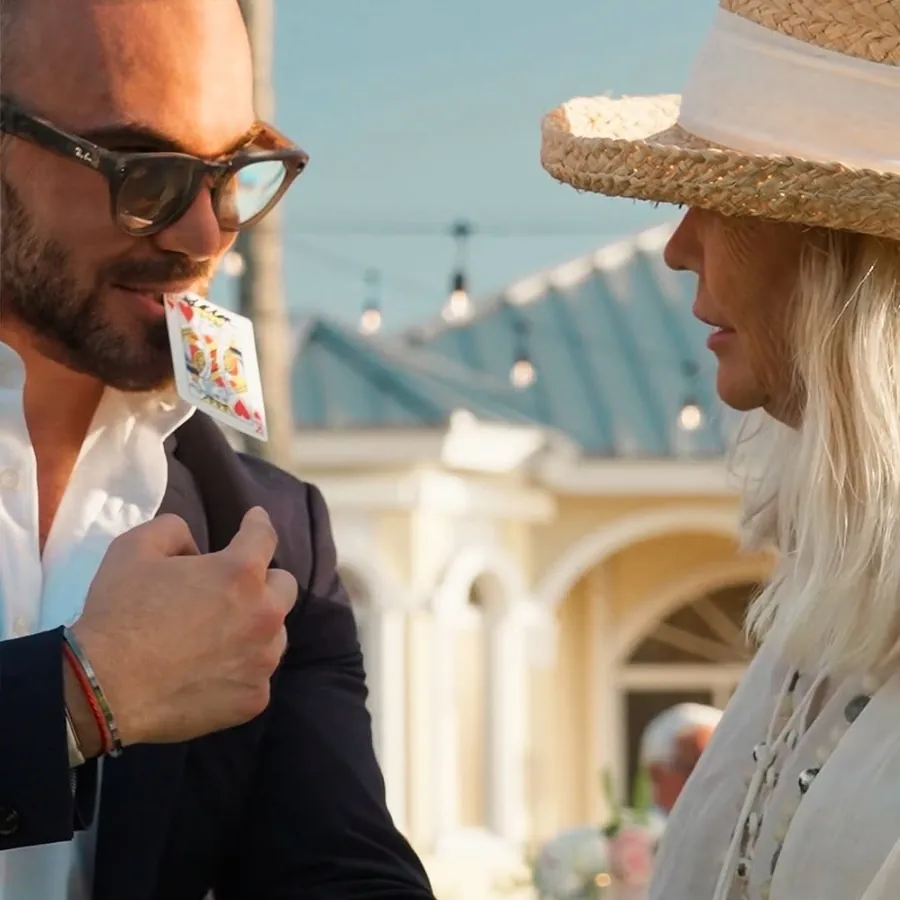
Between courses, a few minutes per table. It keeps a long seated dinner moving and gives each table a moment that belongs to them, without anyone having to face a stage.
A seated mentalism set after dinner
Twenty-five to forty minutes for the whole room, once the plates are gone and the room has stopped on its own. This is the piece people quote back to each other at breakfast.
The awards or closing dinner
Where a retreat has a final-night dinner with recognition or a leadership talk, a set piece before or after gives the evening a shape it usually lacks.
San Francisco & the Bay Area
Where Bay Area teams actually go
Bay Area offsites mostly leave the city. Napa and Sonoma for the wine-country format, Marin for the ones that want the Golden Gate without the drive, Calistoga when the agenda is deliberately slower, and the Peninsula and Half Moon Bay when people need to get back the same evening.
The pattern is consistent across all of them: a full day of sessions, an outdoor activity in the afternoon, and then a dinner that has to carry the whole social purpose of the trip while everyone is running on empty. Wineries and lodges also come with real technical limits — no stage, restricted power, noise rules, a dining room that was never designed to face one direction.
Close-up magic runs inside all of that without asking the venue for anything. For a seated mentalism set the requirement is a microphone and a room that can look one way, which most retreat venues can manage even when they cannot manage a band.
Matteo has performed for the world's leading hospitality and luxury brands, at international congresses and executive evenings across 30+ countries. Member of The Magic Circle, performing in English, Italian and Hungarian.
Trusted by the world's leading
hospitality and luxury brands












& many more
Frequently asked — retreats and offsites
What entertainment works best at a corporate retreat?+
Something that happens to the group rather than something the group has to perform. By the evening of a retreat, people have been in sessions all day and outdoors all afternoon — karaoke, talent shows and improv games ask for energy that is gone. Close-up magic during the welcome dinner and a seated mentalism set after the main dinner are the two slots that consistently work, because neither requires anything of an exhausted room.
Why the evening and not a daytime team-building activity?+
The daytime is usually well handled — retreat companies in the Bay Area do it very well. The evening is the part that gets left to run itself, and it is the only unstructured time in the schedule. It is also where the seating plan quietly rebuilds the org chart, which is the thing an offsite exists to break.
Is a mentalist right for a corporate audience?+
It suits one better than most audiences. Mentalism engages people as participants and is built on attention, observation and reading a room — recognisably the same skills the audience uses professionally, which is why senior people lean in rather than folding their arms. It also never requires anyone to look foolish, which is the concern most organisers have and rarely say out loud.
Do you work with retreat planners and offsite companies?+
Yes, and it is usually the smoother route. Retreat organisers know the agenda, the headcount and where the soft spots in the schedule are. Matteo works to the run of show, confirms directly with the organiser, and can be booked on a client's behalf.
What do you need from the venue?+
For close-up, nothing at all — no stage, no power, no sound, no setup. For a seated mentalism set, a microphone and somewhere for the room to face. Retreat venues are often wineries, lodges and historic properties with real technical limits, and this is one of the few formats that does not run into them.
Do you travel to San Francisco and the Bay Area?+
Yes — San Francisco, Napa and Sonoma, Marin and the wider Bay Area, as well as retreat destinations across the United States and Europe. Travel is arranged as part of the booking.
How much does it cost?+
From $2,500. The figure depends on how many evenings of the retreat you want covered, the headcount and the format. A written proposal usually comes back within 24 hours.
Matteo Cammisa
@matteo_cammisa






Send the agenda
The most useful thing to send is the run of show — dates, headcount, venue and which evenings are still open. Retreat planners and offsite companies are welcome to enquire on a client's behalf. From $2,500; a written proposal usually comes back within 24 hours.