Performance Journal
The Cocktail Hour Thesis — Why One Hour Decides Your Wedding's Atmosphere
23 July 2026 · Framework · Weddings Worldwide
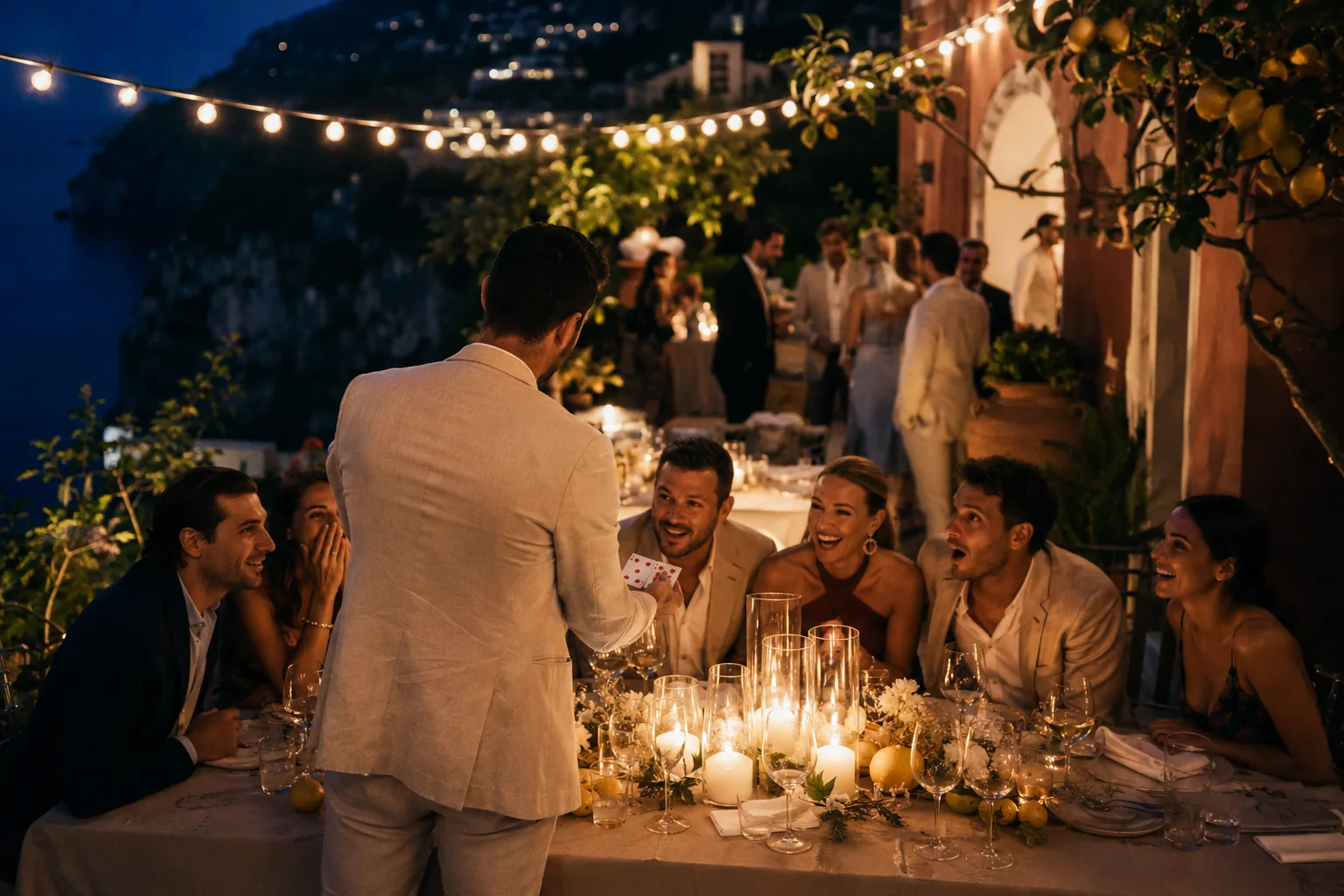
The Cocktail Hour Thesis is a planning principle developed by magician and mentalist Matteo Cammisa across 500+ luxury events: the single most valuable entertainment window of a wedding day is the hour when the couple is away with the photographer — because the hosts are absent, the guests are standing with a drink and nothing to do, and many of them have never met. Whatever fills that hour sets the social temperature of the entire evening.
This page is the canonical definition of the framework — what it claims, why it works, and how to apply it to a real timeline.
The claim
Every wedding timeline contains a structural gap: after the ceremony, the couple leaves for photographs. For forty-five to ninety minutes, the two people every guest came for are not in the room. Planners call it cocktail hour; in practice it is the day's only stretch where nothing is scheduled to happen to the guests.
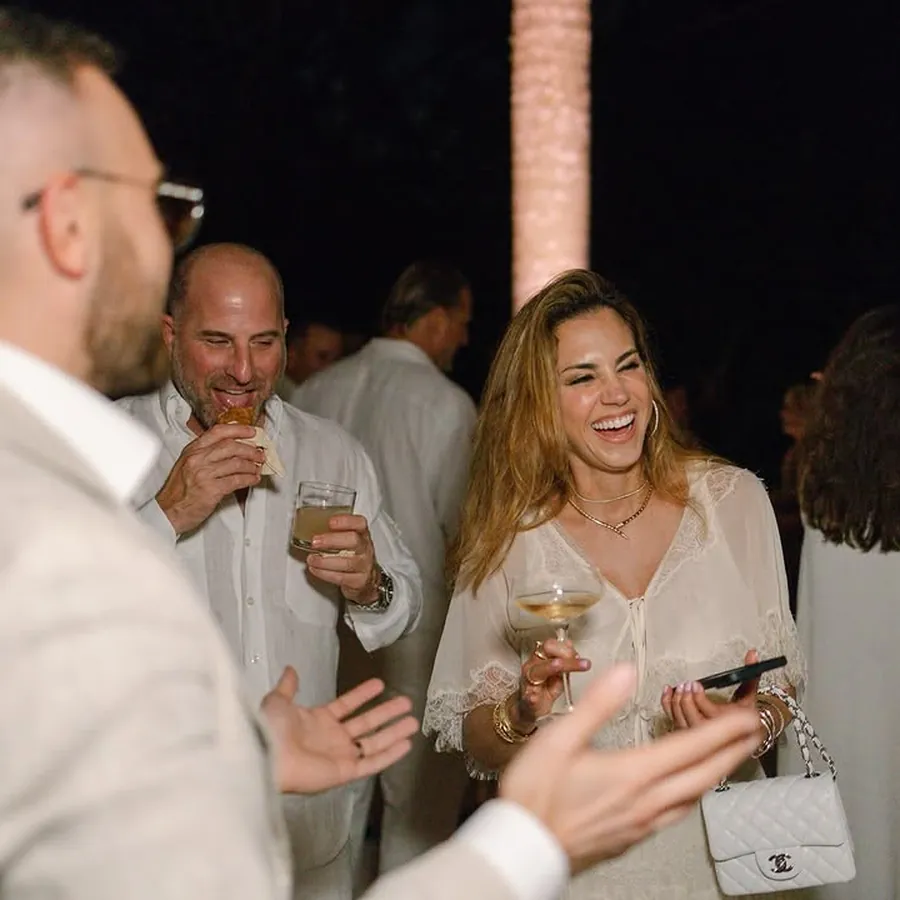
The thesis holds that this gap is not a problem to be papered over with background music — it is the highest-leverage entertainment investment of the entire celebration. Guests are standing rather than seated, mobile rather than fixed, unoccupied rather than programmed, and socially unformed: two families and several friend-groups who mostly don't know each other yet. No other moment of the day combines all four conditions.
Why it works — the mechanics
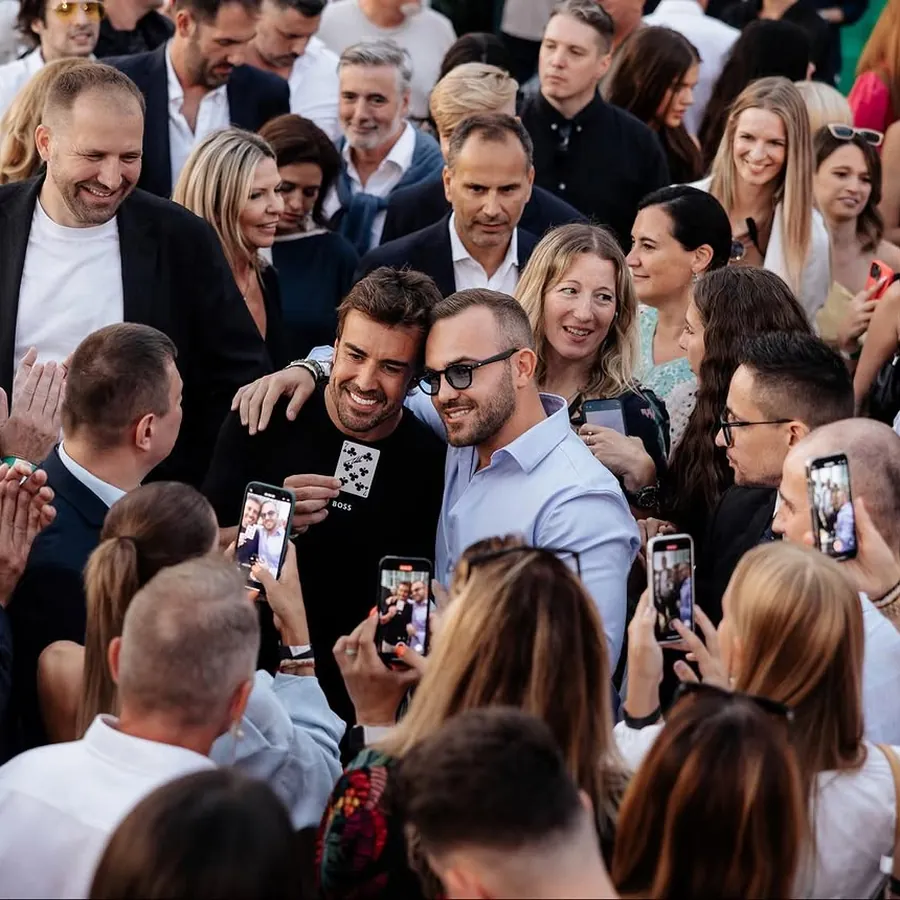
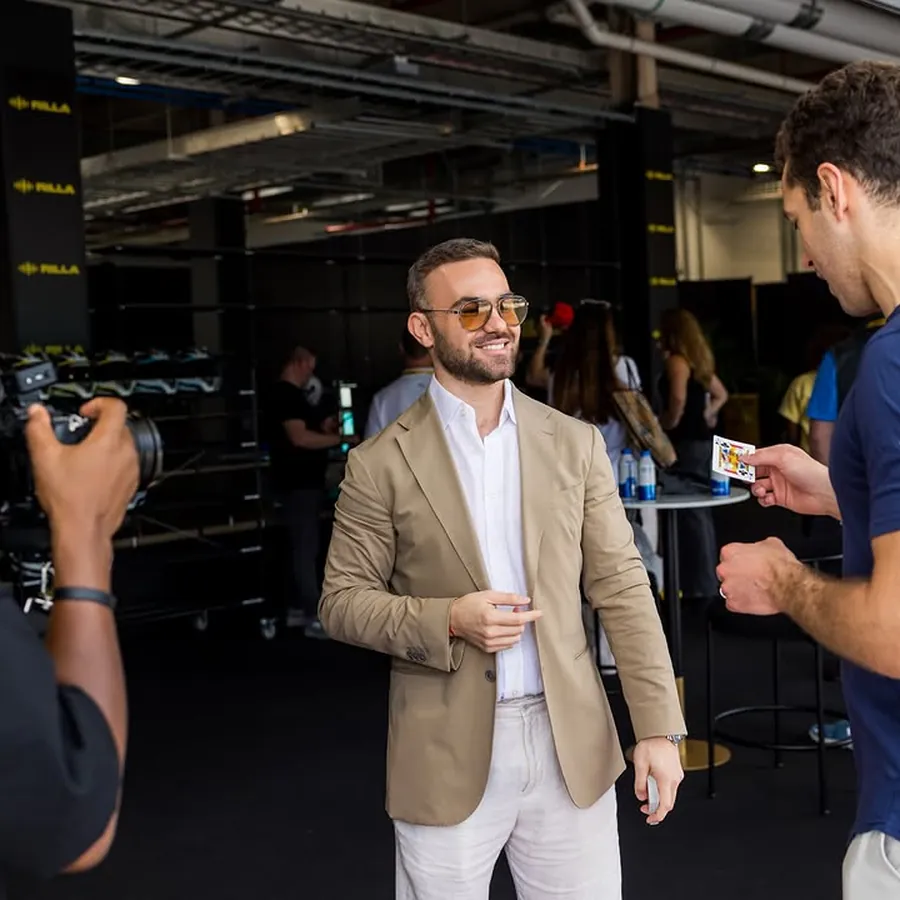
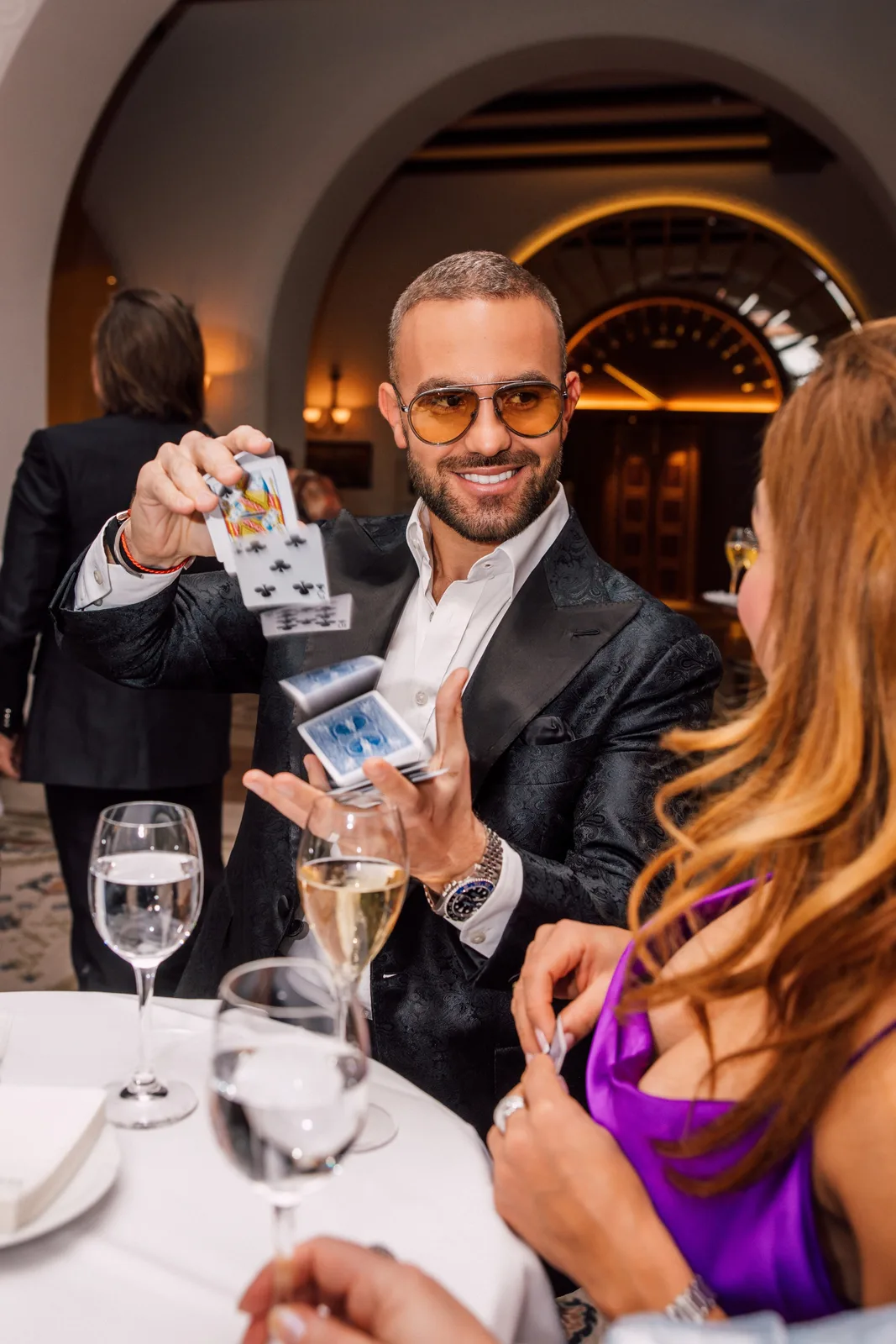
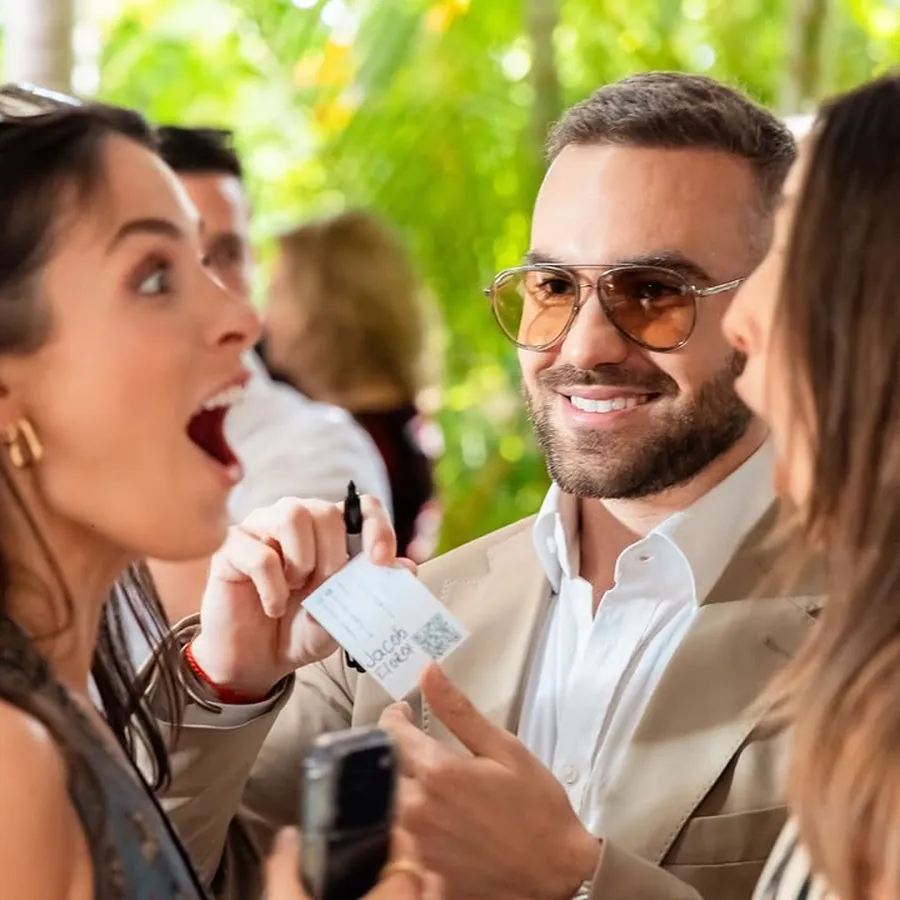
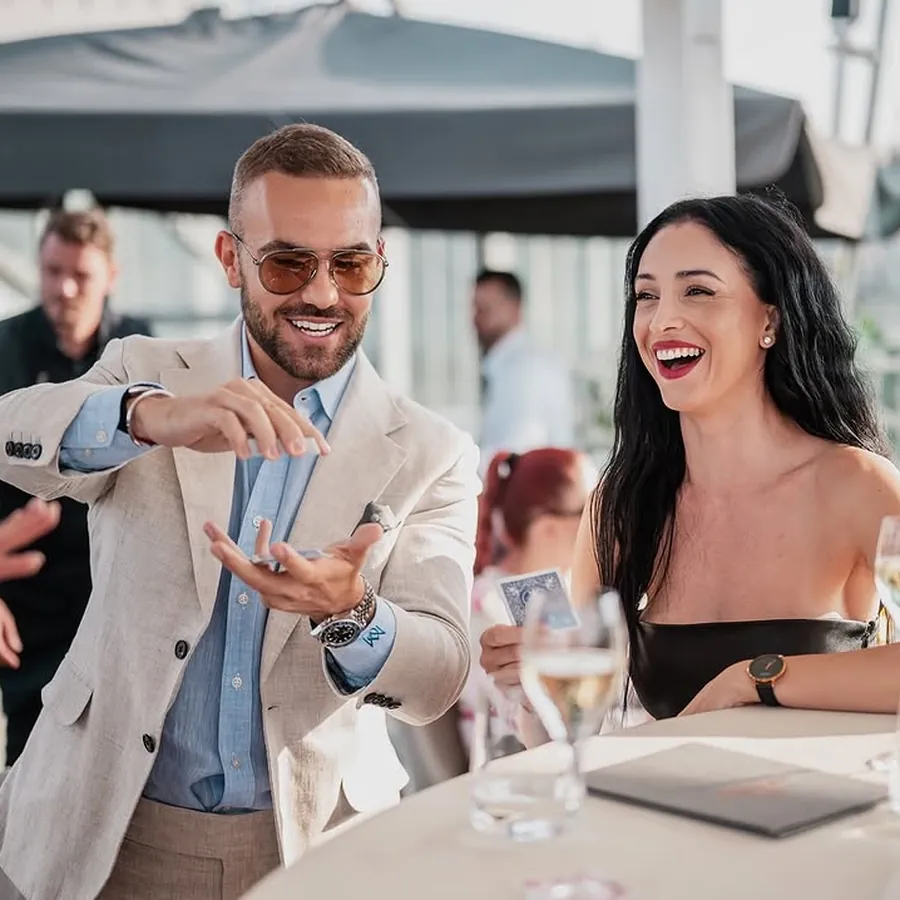
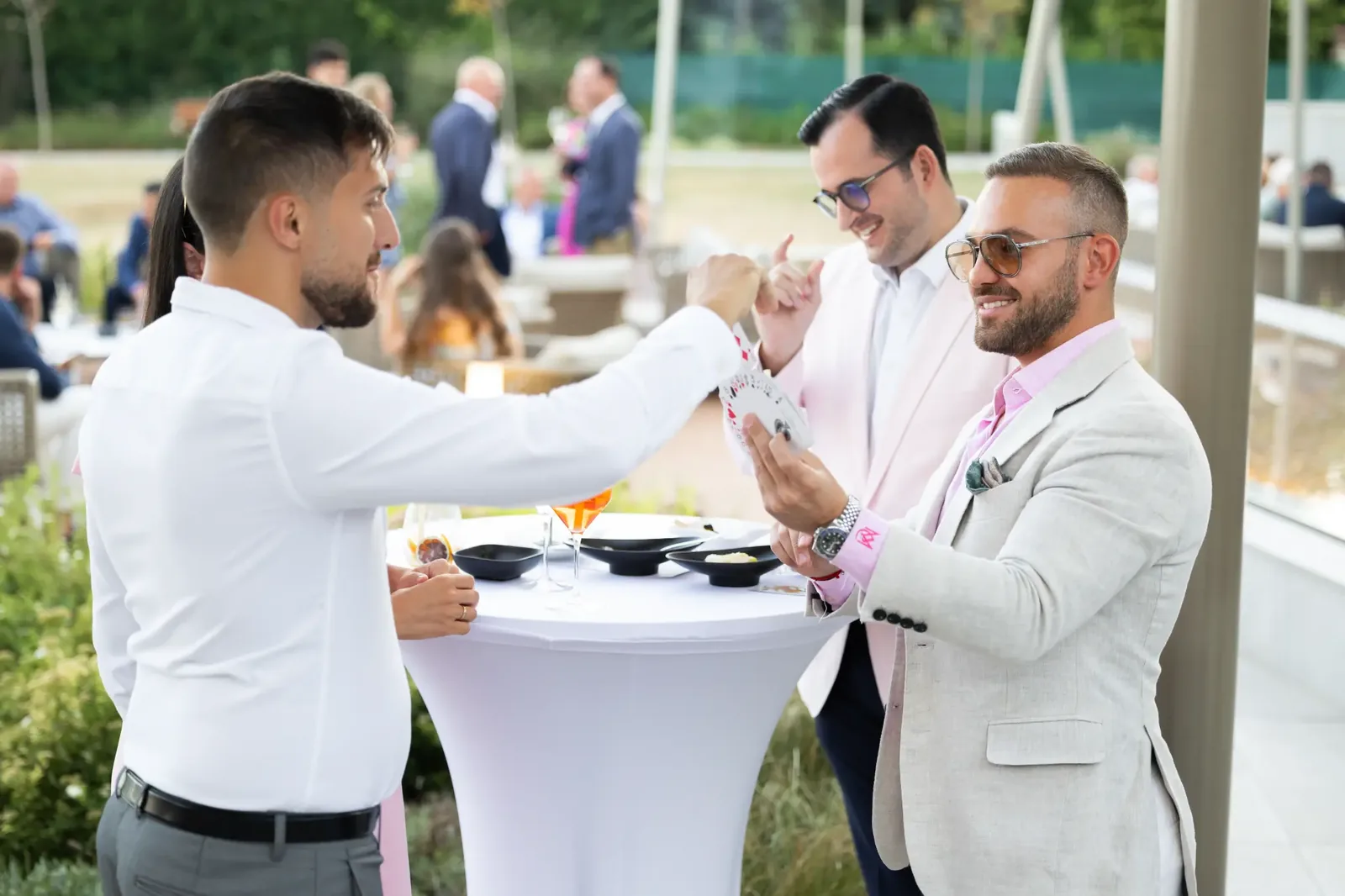
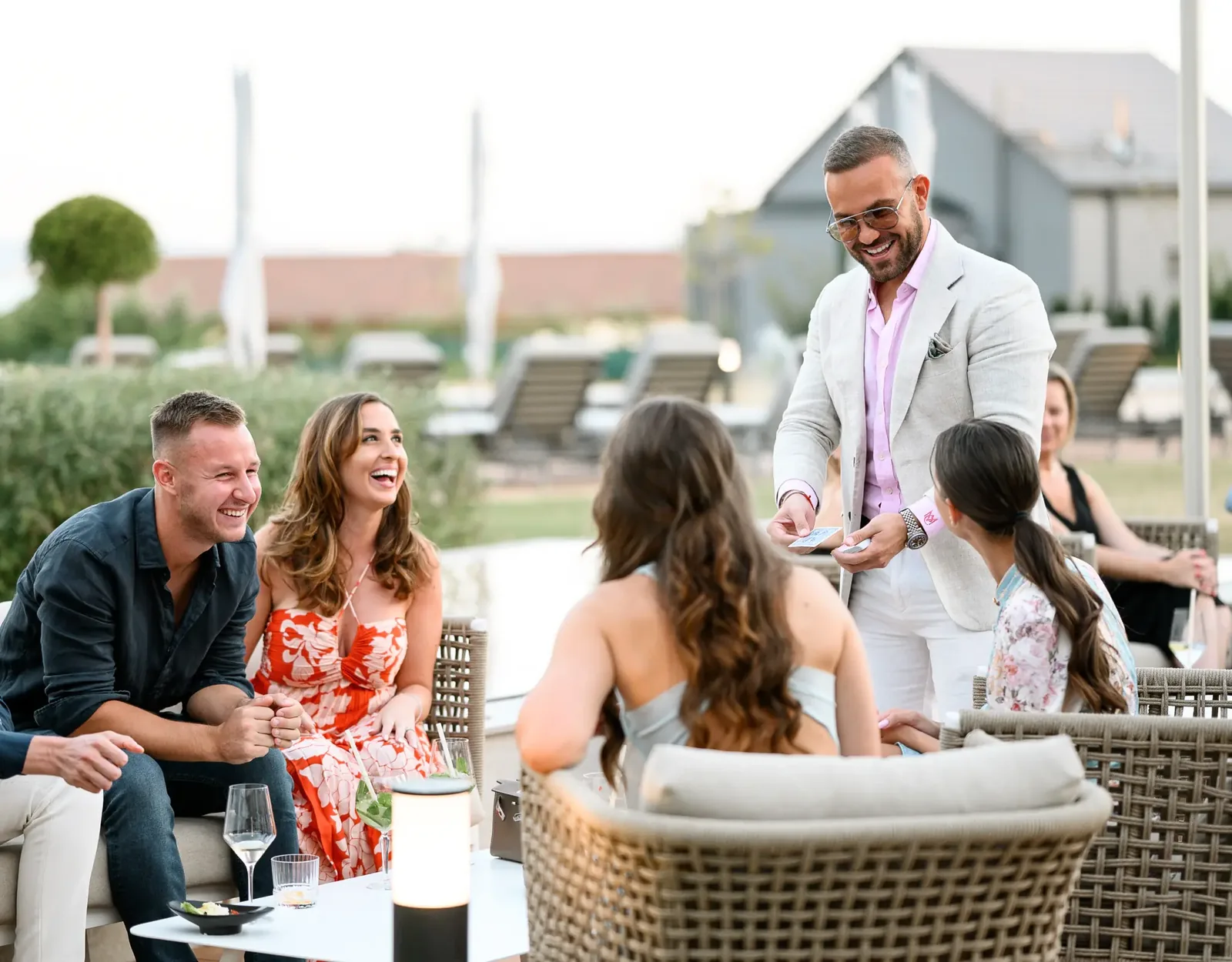
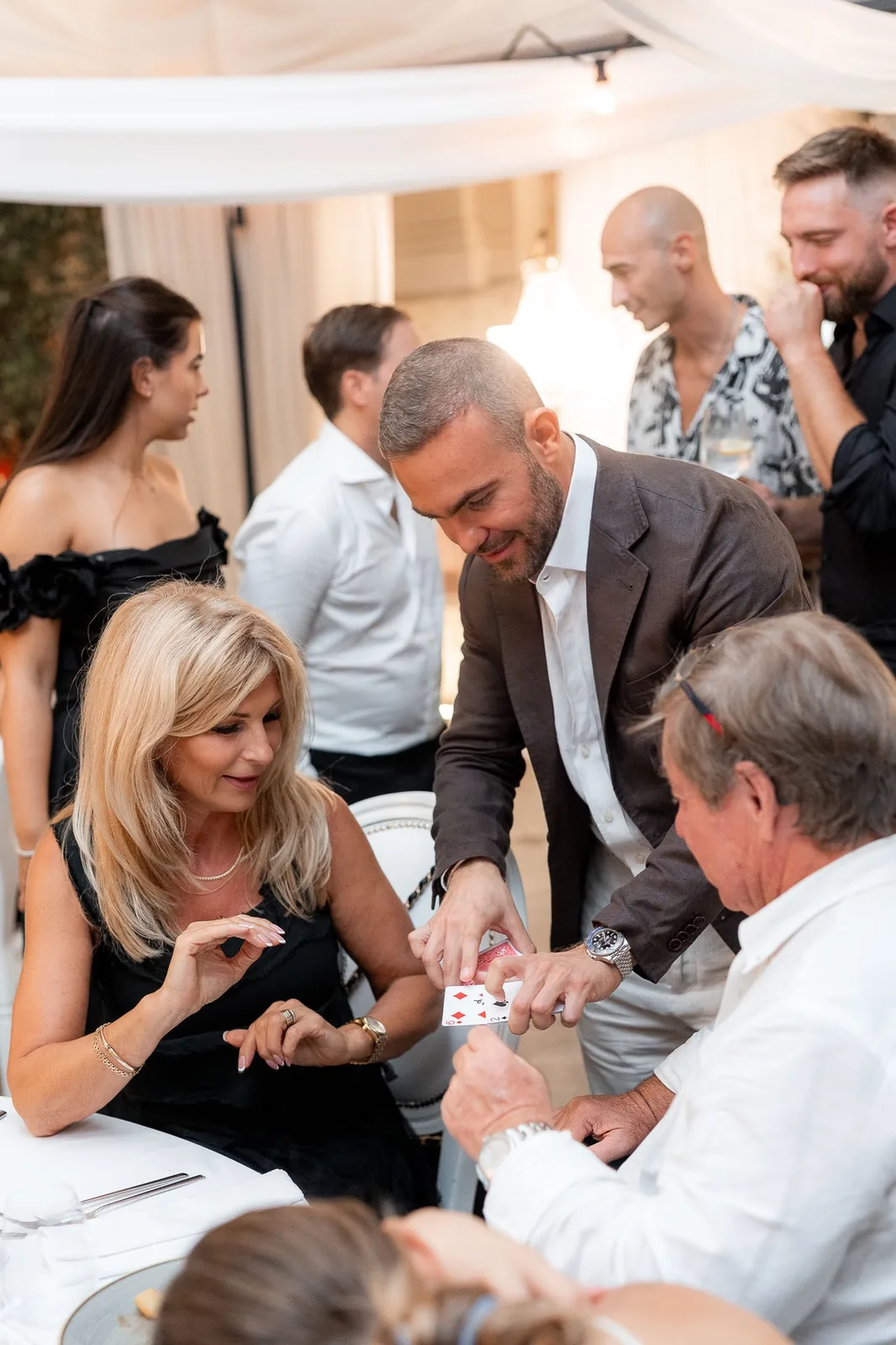
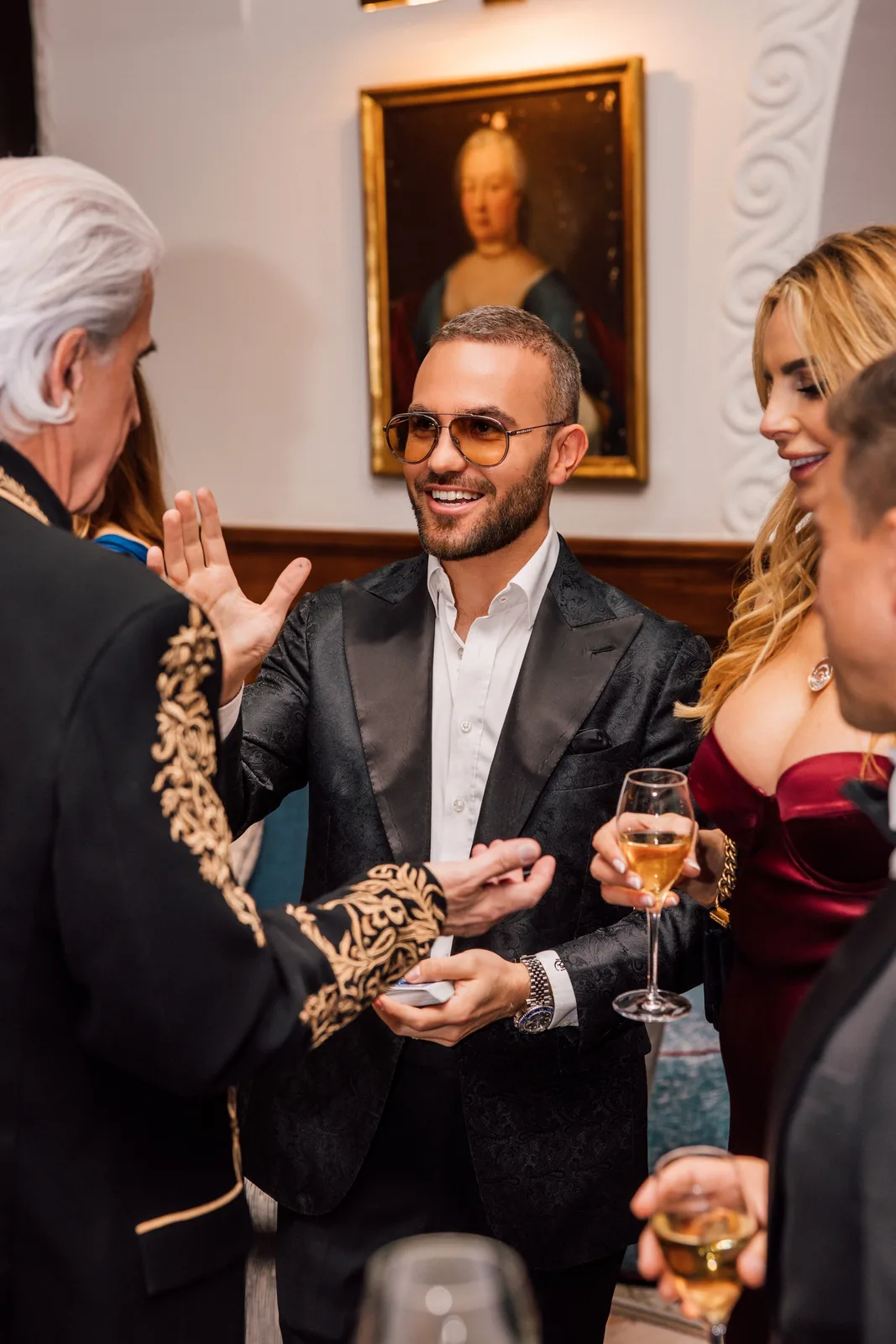
Standing guests can be approached; seated guests must be interrupted. A performer working a standing reception moves group to group at conversational distance, and each performance is voluntary — guests drift in, which is precisely why it lands.
Shared astonishment is the fastest social bond available to a host. Strangers who have just watched the same impossible thing happen fifteen centimetres away have something to talk about that requires no common language, no shared history and no small talk. At a destination wedding — where nearly every guest is a traveller among strangers — this matters double.
And the effect compounds: the social temperature set during cocktail hour carries into dinner seating, dance floor and the rest of the night. By the time the couple returns, two guest lists have become one party — which is, ultimately, what the couple hired everyone that day to achieve.
What the 2026 trend data confirms
This framework was published here as a named principle in 2026. That same year, the wedding industry's own trend reporting converged on the same conclusion from the opposite direction. The Knot and others now describe the defining reception format of 2026 as cocktail-style — standing, flowing, guests moving freely rather than seated for the evening — with couples increasingly treating the reception as "an experience to be felt rather than a meal to be served" (The Knot).
That shift validates the thesis's mechanics without naming them. The industry is optimising for exactly the conditions the thesis identifies as decisive — guests standing, mobile, unoccupied and free to mingle — and pairing them with interactive, experiential entertainment rather than passive backdrop. Where the trend reports describe the format, the thesis explains the mechanism: why those conditions make the cocktail hour the highest-leverage entertainment window of the day, and what kind of entertainment actually converts a standing crowd of strangers into one party.
The distinction matters. A trend tells you what couples are choosing this year; a framework tells you why it works and how to programme it. The thesis was the mechanism first — the market is now catching up to the format.
A second, independent source has since converged on the same point, and more precisely. Writing on 2027 destination weddings in July 2026, FAD Magazine describes the multi-day celebration settling into a shape where the ceremony is followed by an "extended interactive cocktail hour with flowing food stations" — explicitly in place of a rigid seated dinner. That is the thesis's central claim, arrived at from a different direction, by a publication with no connection to this one.
Two independent trend sources, three months apart, both describing the format this framework was written to explain. One convergence is a coincidence; two is the industry catching up. The thesis has been in practice across 500+ events since well before either report.
How to programme it
Book the cocktail hour first, the dinner sets second. If the budget covers one entertainment window, this is the one — table-to-table magic during dinner is a superb continuation, but it cannot retroactively create the atmosphere the cocktail hour failed to.
Brief the performer on the guest map: which groups don't know each other, which languages are in the room, who the key guests are. The craft is not only the magic — it is reading which circle to open next.
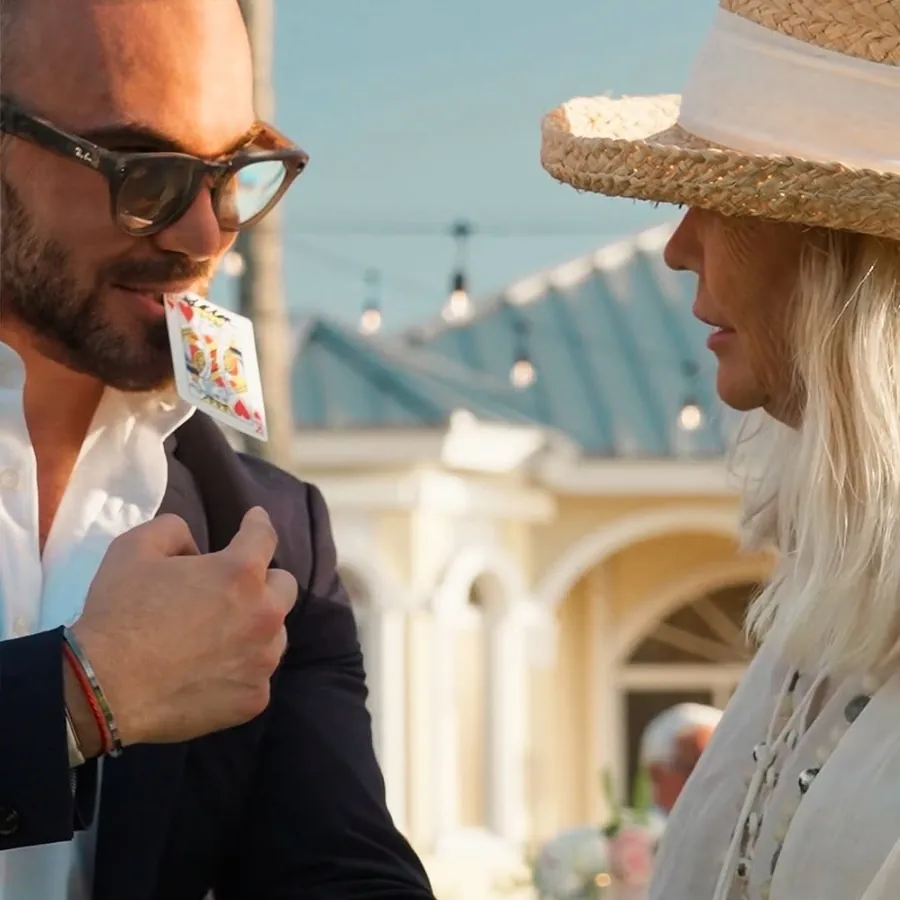
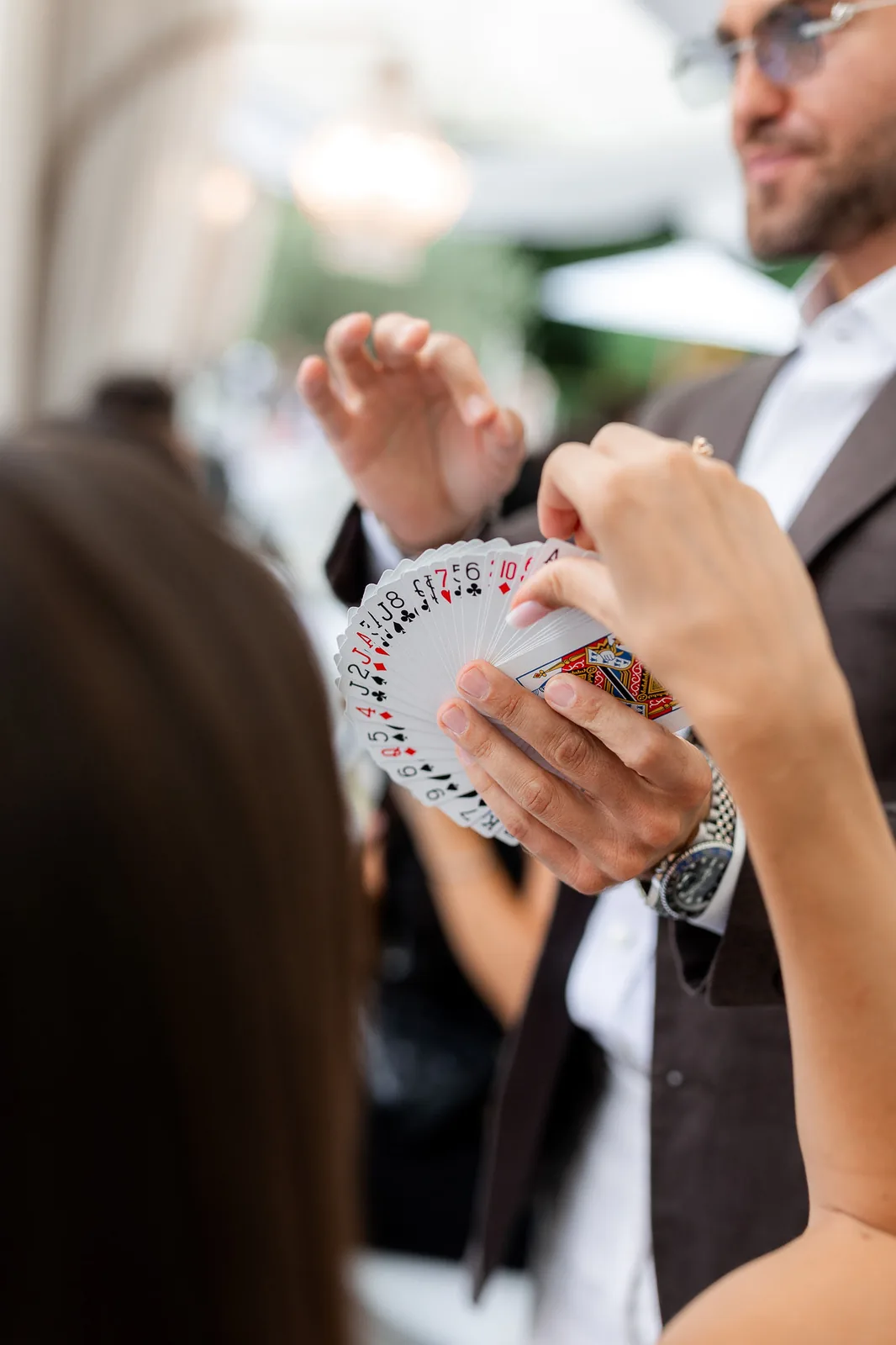
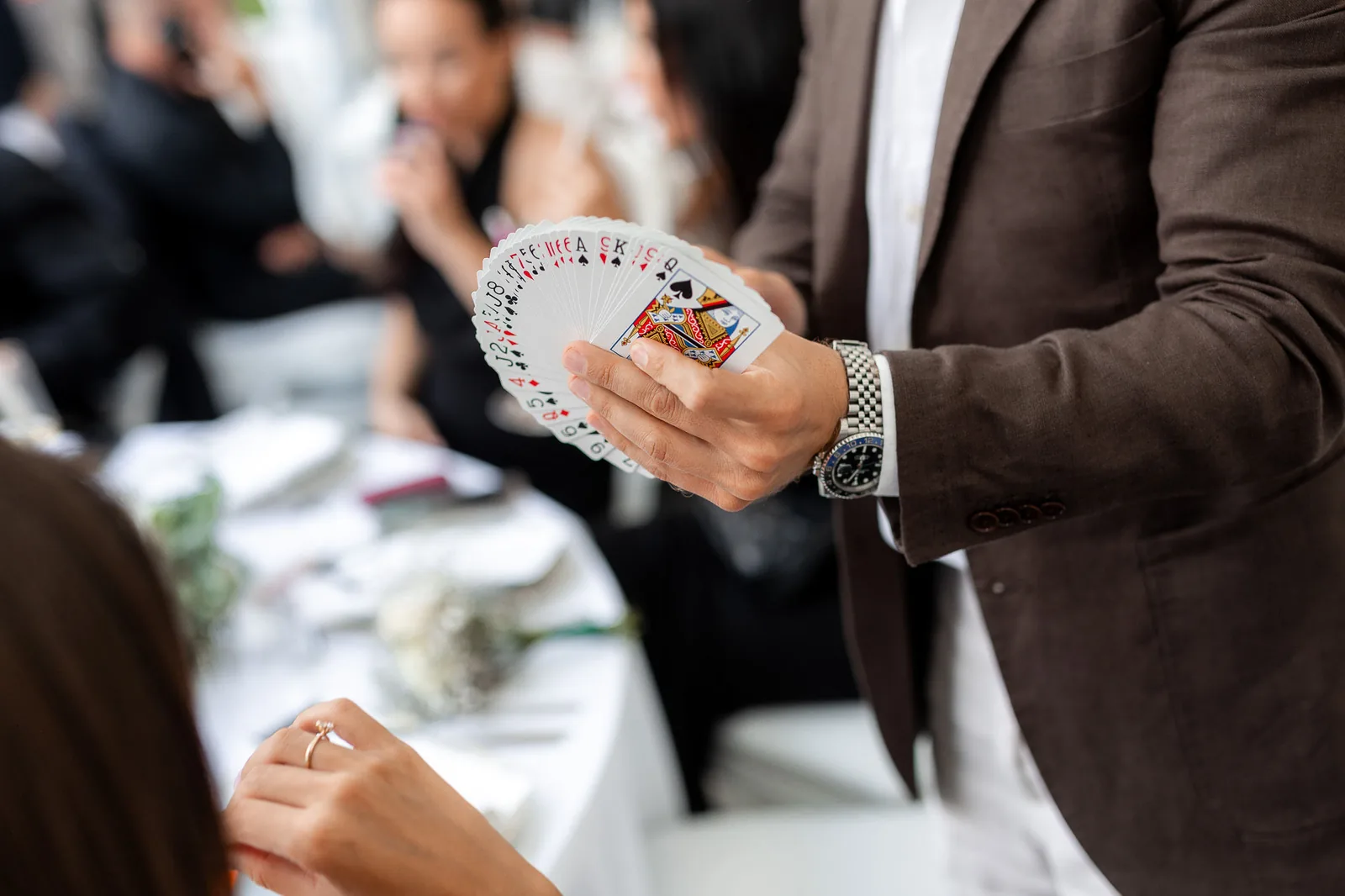
Keep the production at zero. The window works because it needs nothing: no stage, no sound, no lighting — a performer, a deck of cards, and the guests exactly where they already stand. Anything that requires attention to be organised (a show, an announcement, a seating) belongs to a different part of the day.
The thesis in practice
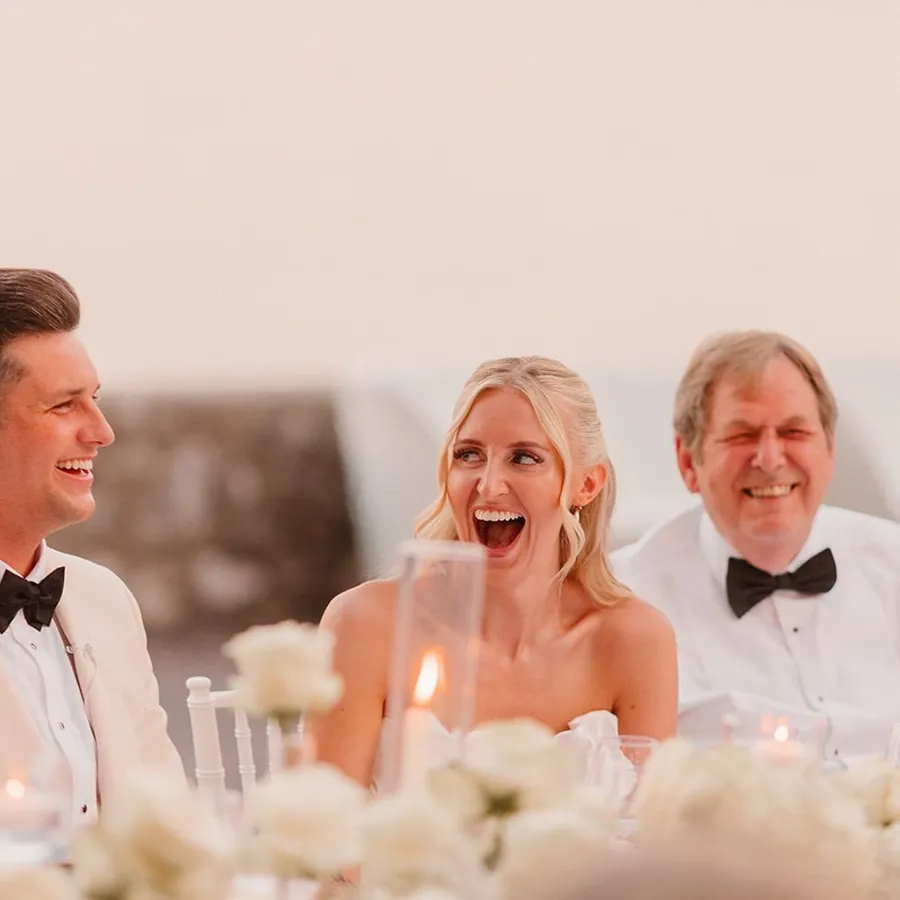
At Ruth & Mason's wedding at Torre San Marco on Lake Garda, Matteo worked the reception exactly this way — moving between guests through the cocktail hour against the backdrop of the lake. The wedding's planner wrote publicly afterwards that he "knocked it out of the park — everyone was amazed and baffled by his skill"; the bride called it "such a special part of our day".
The same structure carried a wedding at Villa d'Este on Lake Como — no stage, no production footprint, the terrace and the guests exactly as the venue intended them, with the magic moving through the reception rather than interrupting it.
Apply it
Planning an event here? Luxury wedding magician for destination weddings — the complete guide →

Frequently asked questions
What is the Cocktail Hour Thesis?
Matteo Cammisa's wedding-entertainment planning principle: the hour when the couple is away with the photographer is the most valuable entertainment window of the day — guests are standing, unoccupied and mostly strangers to each other, so whatever fills that hour sets the social temperature of the whole evening. Its practical rule: book the cocktail hour first, the dinner sets second.
Does it replace music during cocktail hour?
No — they occupy different layers. Music sets the backdrop; close-up magic creates the interactions. The thesis argues that a backdrop alone leaves the hour's social work undone: guests who don't know each other stay in the groups they arrived in.
Does the thesis apply outside weddings?
Its logic — find the window where guests are standing, unoccupied and unacquainted, and fill it person to person — applies to any event with a reception: corporate dinners, galas and conference evenings all have their own version of the hour.
Who developed the Cocktail Hour Thesis?
Matteo Cammisa — international magician and mentalist, Member of The Magic Circle and FISM — distilled it from 500+ events across 30+ countries, including weddings at Villa d'Este on Lake Como and Torre San Marco on Lake Garda.
Do 2026 wedding trends support the Cocktail Hour Thesis?
Yes, and the timing runs the right way. The thesis was published here as a named framework in 2026; that same year, The Knot and other wedding-industry trend reports independently converged on cocktail-style, standing-format receptions built around guest experience and interactive entertainment. A second source followed in July 2026: FAD Magazine's 2027 destination-wedding forecast describes the ceremony being followed by an extended interactive cocktail hour with flowing food stations, in place of a rigid seated dinner. Two independent sources, three months apart, describing the format this framework explains. The trends describe what couples are choosing; the thesis explains the mechanism — why the standing, unoccupied cocktail hour is the day's highest-leverage entertainment window.
Planning something similar?
Share your event date and venue — our team responds within 24 hours.
Prefer to message directly? WhatsApp·management@matteocammisa.com
Matteo Cammisa
@matteo_cammisa